Movie
Family
Drama
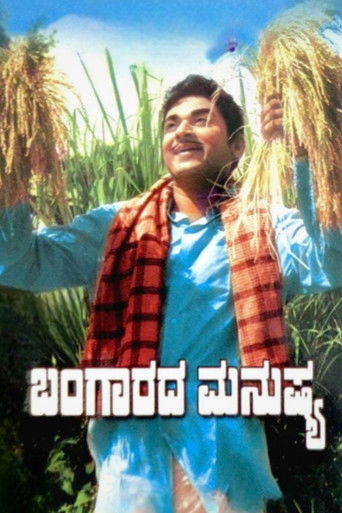
Bangaarada Manushya
9.4Mar 31, 1972174 min
Rajeeva comes to the village to visit his sister only to find that she's in financial trouble and has lost her husband. He decides to stay and help her out.
Rajeeva comes to the village to visit his sister only to find that she's in financial trouble and has lost her husband. He decides to stay and help her out.
Social
Community reviews published on TMDB.
**Bangaarada Manushya: A Masterpiece Beyond Time** **Movie Review/Analysis:** **Cast:** -Dr. Rajkumar as Rajeeva -Bharathi as Lakshmi -T.N. Balakrishna as Rachutappa -Srinath as Chakrapani -Vajramuni as Keshava -Advani Lakshmi Devi as Sharada -Kala as Saraswathi -Shringar Nagaraj as Sridhar -Loknath as Ramachandra -B.V. Radha as Nagaveni -Joker Shyam as Goffuru -Dwarakish as Shivalingu **Crew:** Director: Siddalingaiah Based on the novel of the same name by T.K. Rama Rao Production (Banner): Srinidhi Productions The duration of Bangaarada Manushya is 174 minutes **General Information:** Kannada Film Industry (KFI) began in 1934, and since then there have been numerous classics, and among those numerous classics, one classic stands tall and the name of that classic is Bangaarada Manushya. For me, Dr. Rajkumar is the greatest actor of all-time in the history of cinema. Bangaarada Manushya stands tall in the list of movies that are masterpieces (Both Dr. Rajkumar and non-Dr. Rajkumar movies). I have seen numerous films across various languages, and no film has ever moved me as much as Bangaarada Manushya, which is my favourite movie of all-time and personally for me, it is the greatest movie of all-time in the history of cinema as well and I know that this is the bold take because old Kannada classics don't have much visibility outside Karnataka but it is just the case of me being honest to my instincts as visibility is not equal to quality. I watched Bangaarada Manushya for the first time in 2003 in Sri Nakoda DVD as a four year old boy, and since then I don't know or have no count regarding how many times I have rewatched it, it is truly a perfect and a flawless movie. Bangaarada Manushya was based on the novel of the same name by T.K. Rama Rao and the screenplay was written by Siddalingaiah, who also directed the film. Bangaarada Manushya marked the sixth collaboration between Dr. Rajkumar and Siddalingaiah after Mayor Muthanna, Baalu Belagithu, Namma Samsara, Thayi Devaru and Nyayave Devaru, all of which are also masterpieces in my opinion. Bangaarada Manushya released on 31st March 1972. **The Plot:** After the censor certificate and the titles, the film begins with Rajeeva (Dr. Rajkumar) getting down from the train and sings Nagunagutha Nali, an inspirational philosophical song, while he is on his way to visit his sister. Upon arrival, he finds out that his brother-in-law is dead, and his sister, Sharada (Advani Lakshmi Devi) has been widowed. She had not informed Rajeeva because it would disturb his studies. Rajeeva and Sharada’s elder brother, Ramachandra (Loknath) who is a bank manager wants to give some money to Sharada as her financial situation is now very poor but his wife Chaya (M.N. Lakshmi Devi) prevents him from giving money. Rachutappa (T.N. Balakrishna), who is Rajeeva’s family friend and highly respected person in the village is taking a shaving from a barber (Ganapathi Bhat) as a villager comes there and Rachutappa scolds him for not paying the interest. Sharada’s sons, Keshava and Chakrapani (Vajramuni and Srinath),are bright students, who does not want to study further and do a job as their financial situation is so poor that they have to sell utensils to eat, but Rajeeva tells them about his late brother-in-law’s wish to get them educated. Ramachandra goes back to city. Rajeeva takes loan from Rachutappa to sponsor the education of Keshava and Chakrapani. Rachutappa happily gives the loan saying that his son, Shivalingu (Dwarakish) is also studying. Shivalingu is shown as a spoiled brat in the city. Rajeeva sends Keshava and Chakrapani to Bangalore, where their hostel accommodation is arranged by a doctor who is a family friend. Sharada wants to visit his elder brother, Ramachandra, which is not advised by Rajeeva, however she refuses to listen, and Rajeeva tells her that he will take loan from Rachutappa and send her. Sharada goes to Ramachandra’s house, but is insulted by Chaya and her daughter, Nagaveni (B.V. Radha). She returns without even having food. Rajeeva who is about to go to meet Honna (M.P. Shankar), to reclaim his brother-in-law’s 2 acres land, meets her and tells her that one day they would come searching to maintain relationship, and goes to meet Honna. Rajeeva and Honna have a conversation, where Honna refuses to give the land, leading to a fight in a paddy field, where Rajeeva gains an upper hand, but Rachutappa along with Chamaiah (Shani Mahadevappa) stop the fight, and orders Honna to give that land back to Rajeeva. Goffuru (Joker Shyam) and an another villager is shown interacting. Rajeeva takes Rachutappa’s blessings as Lakshmi (Bharathi), neighbour’s daughter and Saraswathi (Kala), Sharada’s daughter are in the background. Rajeeva starts tilling the land with the help of Chamaiah. Rajeeva learns very fast and begins tilling the land on his own, but blisters are formed on his hand. Chamaih asks him that he would do it. Rajeeva tells that then when would he learn. Sharada feels very sad that her brother who should have been an officer signing signatures is tilling the land, but Rajeeva tells her that hands which plow gives rice even to officers. Sharada leaves that room. Rajeeva asks Saraswathi to get coconut oil which when applied to his hand, would cure his blister. Lakshmi who had come there, and waiting outside the room, whispers to Saraswathi, and she comes and informs Rajeeva that Lakshmi has brought medicine which when applied would cure his blister and his body as well. Upon being playfully teased, Rajeeva hits her shoulder, and she hits his back and runs from the room. Rajeeva and Lakshmi have a conversation where Lakshmi applies medicine to Rajeeva’s hand. Lakshmi is then shown washing utensils, as Rajeeva is in the background. Lakshmi sees herself and Rajeeva standing in the background in the mirror, and she sings Baala Bangara, and dances around in joy, as Rajeeva follows her, observing her. After the song, Rajeeva and Lakshmi playfully tease each other. Shivalingu comes and forcefully hugs his father, Rachutappa in a western style which irritates him. Rachutappa says that he sent him to study and not spend time unnecessarily by indulging in fancy habits, and gives example of Sharada’s sons, who are studying well in the city. Shridhar (Shringar Nagaraj) meets Keshava and Chakrapani, and here we get to know that Rajeeva has started sponsoring Shridhar’s education. Rajeeva tells Rachutappa that he has to get Keshava and Chakrapani’s education completed, get Saraswathi married, and even look after food expenses, so the 2 acres of land was inefficient, and with the help of his friends, and government subsidy, he is buying 25 acres of barren land. Rachutappa does not understand this and asks why did he take such a hasty decision. Rajeeva says he has decided. Rachutappa gives him the money. Goffuru, the barber and the other villagers make fun of Rajeeva. Rachutappa sees the land and loses hope. Rajeeva sings Aagadu Yendu, and develops the land, in the song. After the song, Rajeeva meet Rachutappa, and now Rajeeva is a rich and successful farmer and Rachutappa is proud of him. The barber, Goffuru and the villagers who made fun of Rajeeva, now speak with awe. Rajeeva now has huge bungalow, and he comes down from staircase with a suitcase and informs Sharada that he is going to Belgaum, saying his friend is sick and asks Chamaiah, who is now working for Rajeeva, to take care of his land while he is away. Sharada tells Chamaiah to go with him and make him board the train. Chamaiah takes the suitcase. Shivalingu is eating the food in western style. Rachutappa sees it and hits Shivalingu on his head, scolds him, and tells him to eat in traditional style. Keshava, Chakrapani, doctor, and Shridhar are standing in an orchard, that now belongs to them, and Sharada praises Rajeeva, which is acknowledged by Chakrapani. Shivalingu comes there and there is a conversation between them and Shivalingu, where Shivalingu says he left English, and makes fun of English grammar, while praising Kannada grammar. Rajeeva returns and sees no one there, and there he sees Lakshmi, who opens the door, and there is a conversation between Rajeeva and Lakshmi, where Rajeeva teases Lakshmi and presents her with a red saree, as they (Sharada, Keshava, Chakrapani, doctor, and Shridhar) return home. Rajeeva enquires Keshava, Chakrapani, and Shridhar about their studies, and they give a positive response which makes Rajeeva feel proud of them. Rajeeva and doctor are conversing in a room. Keshava, Chakrapani and Shridhar take Rajeeva’s permission to go for sightseeing. The doctor informs Rajeeva that he has a daughter named Nandini, and Rajeeva interrupts him and tells that he has decided before itself that she would be the daughter-in-law of this house, and he has to agree. The doctor says that him agreeing before he even proposed is his daughter’s fortune and then he enquires about a women named Sharavathi, and Rajeeva says that he went and saw her, and her matter pricks his heart. Lakshmi wears the red colour saree gifted by Rajeeva, while she is carrying lunch to Rajeeva who is working in the orchard. A bull chases her, but Chamaiah sees this and runs and chases the bull away. Lakshmi then meets Rajeeva and they have a conversation where Rajeeva tells about the importance of duty over his personal love. Rajeeva then tells Lakshmi to give him lunch as soon as possible as he is going to meet a rich person. Rajeeva buys a horse for Rs. 1300 from him and informs Sharada about it, who came out of the house when Rajeeva called her. Lakshmi is in the background. Sharada tells Rajeeva to marry Lakshmi, and Rajeeva tells her that when time comes he would marry her and informs her about a fair. Sharada says she would come and pray to God to give him mindset to marry Lakshmi and goes inside the house. Rajeeva then instructs Chamaiah to keep the horseshoe with Goffuru, and then Rajeeva and Lakshmi look at each other. Rajeeva smiles at Lakshmi and goes inside his house. Lakshmi then smiles and leaves indicating that she went to her house. Goffuru comes driving the horse, and calls Rajeeva, who come out of the house. Goffuru praises the horse, and Rajeeva gives him money for keeping the horseshoe and sends him, and calls Sharada saying that the vehicle is ready. Sharada says that she is not well, and would send Lakshmi. Rajeeva is hesitant regarding what people would think as they are unmarried. Rajeeva asks Saraswathi to come, but she also denies saying that this is pre-arranged the previous night after a discussion. Rajeeva then asks Lakshmi to board the vehicle as they wave byes and Rajeeva drives the horse. Vishranti (Interval) card comes. After the interval, Rajeeva and Lakshmi change clothes. Rajeeva and Lakshmi pray to Lord Govinda. They see a dance performance, and dream about each other. In that dream, they sing a duet song, Aaha Mysooru. Chamaiah comes to Rachutappa’s house, and informs him that Sharada has called him. Rachutappa wonders why and tells he would come. Rachutappa comes at Rajeeva’s house, and asks Sharada regarding why did she summon him. Sharada, Lakshmi’s father (H.R. Shastry) speaks about Rajeeva’s marriage with Lakshmi. Rachutappa tells he will ask Rajeeva and asks where he is, and has he still not returned from the fair. Chamaiah tells Rachutappa that Rajeeva has returned and gone to Belgaum. Rachutappa is shocked as why would Rajeeva go to Belgaum. Rajeeva meets Patil, Sharavathi’s neighbour, and he addresses Rajeeva as Kasturi, and Patil confronts Rajeeva for leaving Sharavathi alone. Rajeeva tells him that his business is such that he has to move across various cities. Then Rajeeva knocks the door. Sharavathi (Aarathi) opens the door. Rajeeva enquires her about her and her son, Kishore. Nagaveni comes home and tells that she met Keshava. Chaya tells Ramachandra to make Keshava as his son-in-law. Rajeeva bids farewell to Sharavathi and Kishore and leaves. He meets Patil again, who asks him that he came yesterday and is leaving today. Rajeeva says he is going on work. Rajeeva comes in a Premier Padmini car to Rachutappa’s house. Rachutappa is very happy that Rajeeva purchased a car. Rajeeva takes Rachutappa to his orchard. Rajeeva and Rachutappa have a conversation where Rachutappa gives an ultimatum to marry Lakshmi or he would leave talking with him. Rajeeva agrees but puts a condition that he would marry Lakshmi after the marriages of Keshava, Chakrapani and Saraswathi. Rachutappa agrees. Goffuru comes to a shop to ask something. He sees a villager bargaining the prices about vegetables. Goffuru doubts regarding why he is compromising to sell at low prices. After he leaves, Goffuru asks the shopkeeper and finds out from him that it is stolen. Honna and his friends are stealing fruits from Rajeeva’s orchard. Rajeeva fights with Honna. Goffuru and his friends fight with Honna’s friends. Rajeeva after defeating Honna in a fight, ties him to a tree. Goffuru and his friends do the same to Honna’s friends. Rachutappa comes there and scolds Honna and his friends. Rachutappa asks Rajeeva to summon the Police. Rajeeva tells Honna that going to jail will spoil his honour. Rachutappa then asks Honna why did he steal. Honna says he does not have land and how can he eat. Rajeeva gets Honna and his friends freed and helps them to purchase land through co-operative farming. When the officer comes to allocate lands, Rachutappa asks Shivalingu to arrange for a tea. Shivalingu says he does not want tea so he gave tender coconut. The officer asks Rachutappa what did he study. Rachutappa tells he knows nothing and cannot even spell his moustache in English. Shivalingu says he can and tells moustache in English. Rachutappa asks Rajeeva whether it is correct. Rajeeva nods. Rachutappa then goes and tells Honna to take Rajeeva’s blessings, and when Honna tries to fall at Rajeeva’s feet, Rajeeva hugs him. Ramachandra, Chaya and Nagaveni come to Rajeeva’s house. Ramachandra tells Sharada about getting Keshava and Nagaveni married. Sharada says him to speak with Rajeeva. Rajeeva then comes and asks Sharada regarding Ramachandra’s arrival. Sharada says about the marriage proposal. Rajeeva reminds her about what he had said that they would come one day to establish relationship with them. Rajeeva goes and speaks with Ramachandra, and does taunt him for not helping them when they were in a financially difficult position. Ramachandra apologizes sincerely. Honna and his friends who received the land till the land as Rajeeva and Rachutappa watches. Keshava, Chakrapani and Sridhar come. Rajeeva tells Keshava about Ramachandra’s offer, and seeks his opinion. Keshava tells he likes Nagaveni. Rajeeva then announces Keshava will marry Nagaveni, Chakrapani will marry Nandini, and then takes Sridhar away and has a private word with him, where he tells that he would like him to marry Saraswathi. Sridhar agrees, and Rajeeva comes and announces this. The weddings take place with grand pomp. Shivalingu asks his father, Rachutappa to arrange his wedding. Rachutappa denies. Shivalingu says he will commit suicide and takes some money from Rachutappa. Shivalingu sees that the water is cold, and asks Sun God to heat the water. Rajeeva is driving the car, and he sees Shivalingu and enquires him regarding why he is sitting there. Shivalingu tells him everything. Rajeeva goes to Rachutappa’s house and asks Rachutappa to get Shivalingu married. Rachutappa now reminds Rajeeva about his previous condition that he would marry Lakshmi after Sharada’s children’s marriage, and puts a fresh condition that he would get Shivalingu married only after Rajeeva’s marriage. Rajeeva and Shivalingu agrees. Rajeeva goes back to his house. Shivalingu who also comes in Rajeeva’s car and asks Rajeeva to marry. Sharada and Lakshmi’s father also join and convince Rajeeva, who tells that his marriage with Lakshmi should be very simple. They agree. Rajeeva marries Lakshmi and Shivalingu’s marriage with a women (Pramila Joshai in an uncredited role) also takes place in the same temple. Sridhar and Chakrapani stay in the same village as Keshava has to go to Bangalore as his job is there in Bangalore. Nagaveni who does not like village environment asks Keshava to go fast. Keshava seeks his mother’s blessings and leaves. Rajeeva tells Lakshmi while walking about why he delayed marriage by showing the lush vegetation he had built. Honna and others come and speak about festival they are organizing to celebrate the success of their lands. Rajeeva tells them that an officer related to rural development has agreed to come. Rajeeva, Lakshmi and Rachutappa get down from the car. Honna and the villagers welcome Rajeeva with flowers. Rajeeva gives a small speech and asks the officer to speak. The officer praises Rajeeva and Rachutappa for their efforts in rural development. Then the villagers sing Hanihani Goodidre song. After the song, Nagaveni’s lavish expenditure results in a conversation between Keshava and Nagaveni. Patil comes there to Keshava’s house to cancel his transfer order. There Patil sees Rajeeva’s photo and identifies him as Kasturi, and then he informs Keshava about Rajeeva's periodic visits to Belgaum. To confirm this troubling news, Keshava travels to Belgaum and sees Rajeeva's photo displayed in Sharavathi's house. When asked about Rajeeva, Sharavathi replies, "Mane Yajamanradu" (the house owner). Filled with disrespect for Rajeeva, Keshava confronts him and requests 50,000 Rupees to start a business. Rajeeva was firm that he would give Keshava the money once he understood its value, and leaves the house. After Rajeeva left, Keshava in a fit of anger reveals to Lakshmi and Sharada about Sharavathi, accusing Rajeeva of adultery. However, both Lakshmi and Sharada refuse to believe the accusation, with Sharada saying that Rajeeva was a “Bangaarada Manushya," and Sharada even tells Nandini and Saraswathi not to disclose their knowledge about Sharavathi to Rajeeva. Rajeeva was wondering about Keshava’s back answer. Chamaiah asks what was he thinking. Rajeeva tells him that the plants we raise by watering them may one day fall on our head. Chamaiah says it happens when storm and thunder occurs and then Rajeeva sends him to water the plants. Rajeeva sees Lakshmi who is wearing a red saree being chased by the bull. Rajeeva goes and begins to fend off the bull. While Rajeeva is fending off the bull, Lakshmi falls into a nearby well. After chasing the bull, Rajeeva hears a women shouting that Lakshmi has fallen into the well. Rajeeva dives in to save her, but it is too late, and Lakshmi is already dead. Sharada mourn over Lakshmi’s dead body. Rajeeva puts flowers and is extremely sad. Rajeeva carries the body and performs her last rights by burning her body. Rajeeva is mourning over Lakshmi at the crematorium. Rachutappa consoles him. Nagaveni convinces Keshava to seek legal assistance in reclaiming what is rightfully theirs. Sharada has left food, and Saraswathi tries to convince her mother to have some food, but she denies. Rajeeva also comes and asks her to eat some food. She tells him that she would have food only if he eats. Rajeeva agrees and asks Saraswathi to put the plate. Rajeeva washes his hand and sits to have his food. Keshava arrives there with a lawyer. Sharada comes to the hall, and there is an argument between Keshava and Sharada, which turns bitter. Keshava tells that the house Rajeeva is staying, the clothes he is wearing, and the rice he is eating does not belong to him. Hearing this, Rajeeva washes his hands without consuming a morsel of rice. He quietly exits the house while silently praying for the well-being of the villagers. Chakrapani and the doctor along with Sharavathi are there in the house. Chakrapani asks Keshava to shut up. The doctor asks Keshava whether he knows who is she. Keshava tells she is Rajeeva’s affair. Sharavathi then reveals the truth that she is their (Keshava, Chakrapani, and Saraswathi's) half-sister, an illegitimate child of Sharada's husband. Rajeeva had kept this secret and supported her throughout the years. Determined to find Rajeeva, they set out on a search but are unable to locate him. Rachutappa comes and, remembering their bond, stands in front of Rajeeva’s photo, wishing him happiness wherever he is and asking him to pray for the villagers' well-being. Rajeeva quietly walks into the sunset.\*\*\*\* The film ends with the film’s title, Bangaarada Manushya being displayed. **Story Analysis:** I absolutely loved the story of Bangaarada Manushya which in my opinion is exceptionally strong, perfect, flawless, and it has a profound depth because it is a perfectly built character-driven story centered on Rajeeva, who has a clear goal and purpose. Rajeeva is the central character who drives the entire story of Bangaarada Manushya. In fact I would go further and say that Rajeeva is not merely the protagonist. His decisions, responsibilities, relationships, principles and sacrifices are the very foundation of the narrative. The duration of Bangaarada Manushya is 174 minutes, and despite its duration, the film is extremely fast-paced because the story contains an extraordinary number of developments, and nearly every development either originates from Rajeeva’s actions or directly affects his journey. Rajeeva is the driving force behind every major narrative development. Consider the story progression: The major narrative developments are Sharada’s financial difficulties, Keshava and Chakrapani’s education, recovery of brother-in-law’s agricultural land, agricultural transformation, family prosperity, marriages of Sharada’s children, Honna’s rehabilitation, Village development, Marriage with Lakshmi, Sharavathi’s welfare, Family conflict, Final separation. Rajeeva’s contribution to these narrative developments are: Takes responsibility for the family, arranges loans and finances their studies, confronts Honna and reclaims the property, purchases 25 acres of barren land and makes it productive, establishes financial security through farming, personally arranges and facilitates their marriages, forgives him and helps him become a farmer, promotes cooperative farming and rural prosperity, delays personal happiness until family responsibilities are fulfilled, secretly supports Sharavathi and Kishore, his concealed responsibility becomes the basis for Keshava’s misunderstanding, and leaves the household when his integrity is questioned. What fascinates me about this structure is that Rajeeva does not simply react to circumstances. He consistently makes decisions that create the next major development in the story. That is a defining characteristic of a perfectly written, character-driven narrative. The story progresses through Rajeeva’s changing responsibilities. Bangaarada Manushya’s narrative can be understood through five interconnected phases. They are: i). First phase – Responsibility: Rajeeva arrives intending to visit his sister, but discovers her financial difficulties and immediately assumes responsibility for the family. ii). Second phase — Transformation: He becomes a farmer, reclaims agricultural land, purchases barren land and transforms it into a prosperous agricultural vegetation. iii). Third phase — Fulfilment: He educates his nephews, arranges marriages, supports village development and eventually marries Lakshmi. iv). Fourth phase – Personal tragedy: His hidden support for Sharavathi creates suspicion, Keshava begins questioning his integrity, and Lakshmi dies in an accident. v). Fifth phase — Sacrifice: Keshava challenges Rajeeva's rights over the family's property, prompting Rajeeva to leave everything behind. The truth about Sharavathi emerges only after his departure. There is particularly something significant that has to be noted here is the protagonist’s responsibilities evolve continuously, but his fundamental character remains consistent. Rajeeva begins as a man who puts others before himself and ends as a man who walks away without demanding recognition for everything he has accomplished. This gives the story a remarkable thematic unity. Rajeeva is an active protagonist, and not a passive sufferer, and that is perhaps the strongest aspect of his characterization. Rajeeva is not someone who waits for circumstances to improve. When his nephews cannot afford education, he borrows money. When Honna refuses to return the land, he confronts him. When two acres prove insufficient, he purchases 25 acres of barren land. When the villagers ridicule his decision, he proves them wrong through agricultural success. When Honna steals from his orchard, Rajeeva defeats him in a fight but subsequently helps him become economically independent. When his family responsibilities are fulfilled, he agrees to marry Lakshmi. Every one of these decisions establishes Rajeeva as a proactive individual. Even his final departure is a conscious decision rather than merely something imposed upon him. The further beauty lies in the fact that the supporting characters contribute to the story without displacing Rajeeva. Another important characteristic of the screenplay's underlying story is the way supporting characters possess their own personalities and motivations. Rachutappa represents guidance, affection and traditional wisdom. Lakshmi represents companionship and Rajeeva's personal happiness. Sharada represents family responsibility and unwavering faith in her brother. Honna represents the possibility of moral and economic transformation. Keshava is particularly important because his journey from a financially struggling student to an educated, employed man eventually culminates in a confrontation with the very person who made his progress possible. Yet none of these characters takes the narrative away from Rajeeva. Instead, their individual stories converge around his actions. Rajeeva is the narrative centre, while the supporting characters provide the relationships, conflicts and consequences through which his character is revealed. There is a huge difference between duration and pacing. Both are not same. The lengthy duration does not mean the film should be slow-paced. Pacing depends on the frequency and effectiveness of narrative developments, the movement between situations, and the purpose served by individual scenes. Bangaarada Manushya’s duration may be 174 minutes, but is extremely fast-paced because it has a particularly high concentration of meaningful developments. Within its running time, it covers family hardship, education, agriculture, romance, social reform, marriage, economic prosperity, betrayal, bereavement and sacrifice. Importantly, these are not simply disconnected episodes. They are connected through Rajeeva's continuing journey. Even the five songs have identifiable narrative purposes. Nagunagutha Nali introduces Rajeeva's outlook, Baala Bangara develops the romance, Aagadu Yendu accompanies the agricultural transformation, Aaha Mysooru celebrates romantic companionship, and Hanihani Goodidre reflects collective prosperity. The songs therefore contribute to the progression of the story. Even the comedy scenes involving the villagers like Goffuru, barber etc contribute to the progression of the story where Rajeeva proves them wrong and gains their respect. Shivalingu later becomes the reason for Rajeeva’s marriage with Lakshmi. My assessment is that each and every scene of Bangaarada Manushya is a gem reflects my experience of how successfully these developments are presented. The script of the film is densely structured and continuously eventful. The climax completes Rajeeva’s characterization. This final confrontation is especially significant because Keshava tells Rajeeva that the house he lives in, the clothes he wears and even the rice he eats do not belong to him. Rajeeva responds by washing his hands without eating and silently leaving the house. We have to consider the contrast, where at the beginning, Rajeeva enters a household struggling to survive. Through his labour, determination and sacrifices, he transforms its fortunes. At the end, the same household becomes the setting for an accusation that denies him any rightful place within it. The man who created prosperity walks away without claiming ownership of that prosperity. This is a powerful conclusion because it directly connects the final action to everything Rajeeva has done throughout the film. The revelation that Sharavathi is his brother-in-law's illegitimate daughter further establishes that even his apparently suspicious behaviour originated from his commitment to protecting the family. The ending consequently brings together the film's major themes: duty, selflessness, dignity, family relationships and sacrifice. I would describe Bangaarada Manushya as a protagonist-driven, character-centred family and social drama whose narrative momentum comes from the continuous consequences of Rajeeva's decisions. There is an important distinction here: Rajeeva drives the story, but he does not control everything that happens to him. Lakshmi's death, Keshava's accusations and the eventual family conflict are developments beyond his control. They test the very values that motivated his earlier achievements. That combination of personal agency and unforeseen consequences gives his journey a profound dramatic depth. I would also say that the writing is realistic and natural throughout the film, and I would even say that the drama is organic, realistic and natural. There is one more interesting observation I would like to add is Rajeeva begins the story by entering his sister's life and transforming it. He ends the story by leaving that transformed life behind. That narrative symmetry is, to me, one of the most impressive aspects of the script. For all the reasons mentioned above, the story of Bangaarada Manushya is timeless for me and has aged exceptionally well. My Rating for Story: ⭐⭐⭐⭐⭐ –5/5 **Screenplay Analysis:** I absolutely loved the screenplay of Bangaarada Manushya that was written by Siddalingaiah which in my opinion is flawless, gripping, tight, strong and profound cause-and-effect progression, narrative continuity, character development and sustained dramatic momentum. What distinguishes the screenplay of Bangaarada Manushya is that the film’s 174 minute duration accommodates an enormous number of developments without losing its central narrative focus. The screenplay has a profound and strong cause-and-effect progression because its greatest strength is the way one development naturally produces another. Sharada's husband dies, leaving the family financially vulnerable, Rajeeva assumes responsibility for his sister's family, he borrows money to educate his nephews and reclaims the family's land, two acres prove insufficient for his growing responsibilities, he purchases 25 acres of barren land and transforms it into productive farmland, agricultural prosperity enables him to fulfil his family's ambitions. This progression is particularly effective because Rajeeva's agricultural success is not an isolated achievement. It emerges directly from his family's financial necessities. The same principle governs the later developments involving Honna, Keshava and Sharavathi. The screenplay plants information that becomes important later. One of its most impressive structural qualities is the way seemingly ordinary details acquire greater significance as the narrative progresses. Consider three examples: i). Rajeeva's visits to Belgaum: Initially presented as mysterious, these visits eventually become the foundation of Keshava's suspicion and the final revelation concerning Sharavathi. ii). Keshava's education: Rajeeva's early sacrifices make Keshava's eventual prosperity possible, which makes Keshava's later accusations particularly consequential. iii). Rajeeva's devotion to duty: His repeated willingness to sacrifice personal happiness establishes the character traits that explain his final decision to leave everything behind. The screenplay does not simply introduce conflicts and resolve them immediately. It develops narrative threads across substantial portions of the film before bringing them together. Like I said, Bangaarada Manushya has an extremely fast-paced and a gripping screenplay, but an extremely fast-paced and a gripping screenplay does not require constant conflict. An especially important aspect of Bangaarada Manushya is that its momentum is not dependent exclusively on confrontations, fights or suspense. The screenplay sustains interest through agricultural progress, family relationships, romance, education, marriages, humour, social development and personal sacrifice. For instance, the sequence in which Rajeeva learns farming, develops blisters and explains the dignity of agricultural labour advances his characterization while reinforcing the film's central themes. Similarly, the development of barren land into a prosperous farm represents a major narrative achievement rather than merely a change of setting. This is why my description of the film as extremely fast-paced despite its 174-minute duration is meaningful. Its pace is driven by purposeful developments. The screenplay’s later conflicts derive much of their power from the foundations established earlier. Rajeeva's sacrifices for Keshava make the accusation against him more significant. His love for Lakshmi makes her death profoundly consequential. His reputation for integrity makes the misunderstanding concerning Sharavathi particularly painful. The final revelation also recontextualizes his visits to Belgaum, showing that his secrecy was connected to another family responsibility. Consequently, the screenplay achieves more than a sequence of individual emotional moments. The cumulative weight of earlier developments strengthens the impact of the climax. The moment Rajeeva washes his hands without eating is particularly effective in screenplay terms. It is a straightforward physical action that communicates an enormous amount without requiring an extended speech. The man who has devoted his life to feeding, educating and supporting his family is told that even the rice he is about to eat does not belong to him. His response is silence and departure. The subsequent revelation about Sharavathi resolves the central misunderstanding, but it arrives too late to prevent Rajeeva's departure. This creates a powerful relationship between revelation, consequence and emotional resolution. The screenplay reflects several interconnected strengths: i). The narrative structure has strongly interconnected developments ii). The cause and effect is particularly profound and consistent iii). The pacing is extremely fast-paced, dense, and eventful progression across the 174 minutes iv). The character-driven storytelling centered on Rajeeva as his decisions propel the narrative v). The scene progression is such that family, agricultural, and social developments reinforce one another vi). The foreshadowing and revelations element of the screenplay is that the Belgaum mystery culminates in the Sharavathi revelation vii). The climax is a strong culmination of established character and family conflicts My central observation is that the screenplay never loses sight of Rajeeva, even when it explores the lives of numerous supporting characters. The story provides the film with its philosophical and emotional foundation, while the screenplay organizes those ideas into an interconnected progression of actions and consequences. I would highlight one particular achievement: the screenplay transforms Rajeeva's journey from creating prosperity for his family into a final act of renouncing that very prosperity. The beginning, middle and ending are therefore connected not only by events, but by a consistent philosophy of selfless duty. There are sufficient comedy scenes arising from the story, and the characters, and they are exceptionally well done. The five songs, comedy, and two fight scenes in a tight and gripping screenplay ensures that there is no second of boredom and the entertainment value is absolutely full. Each and every scene in Bangaarada Manushya is a gem. My Rating for Screenplay: ⭐⭐⭐⭐⭐ —5/5 **Acting Analysis:** Dr. Rajkumar, whom I rate as the greatest actor of all-time in the history of cinema, has played every kinds of roles with a flawless perfection that cannot be matched, delivers an extraordinary flawless performance as Rajeeva. Dr. Rajkumar has not acted as Rajeeva, rather he became Rajeeva himself. I cannot imagine any other actor other than Dr. Rajkumar as Rajeeva. Rajeeva is an extraordinarily demanding character because he must embody several dimensions of human experience: responsibility, determination, dignity, compassion, romance, humour, grief, restraint and sacrifice, something I believe that could only be portrayed by Dr. Rajkumar. What makes the characterization particularly impressive is that these qualities are not presented as separate personalities. They belong to the same individual. Dr. Rajkumar as Rajeeva is the soul of the film. The character of Rajeeva undergoes numerous transformations without losing his essential identity. Initially, he is an educated young man who arrives to visit his sister. Upon discovering the family's financial difficulties, he becomes its principal source of support. He subsequently transforms into a hardworking farmer, a prosperous agriculturalist, a rural reformer, a loving husband and ultimately a man who silently relinquishes everything he has built. The performance must connect all these phases convincingly. Dr. Rajkumar achieves this through complete identification with the character rather than through conspicuous displays of acting. Rajeeva’s character has different dimensions like responsibility, determination, confidence, affection, compassion, leadership, restraint, grief and self-respect, which requires a versatile actor who literally becomes the character, and in my opinion only Dr. Rajkumar suits that classification because he is literally the actor who becomes the character despite whatever role has been given to him. The remarkable quality of Rajeeva's characterization is that he can be forceful when confronting Honna, affectionate with Lakshmi, respectful toward Rachutappa and dignified when confronted by Keshava. These contrasting situations require dramatic versatility, which could only be portrayed to perfection by Dr. Rajkumar. The two sequences particularly illustrate why only Dr. Rajkumar could have portrayed Rajeeva: i). Lakshmi's death: Rajeeva desperately attempts to rescue his wife from the well but discovers that she has already died. The subsequent mourning and funeral scenes require the performance to communicate the devastation of a man who has spent years postponing his personal happiness, and that too in a subtle manner. ii). Rajeeva's departure: When Keshava tells him that even the food he is about to eat does not belong to him, Rajeeva quietly washes his hands and leaves. The second scene is particularly important because its dramatic power rests on restraint. Rather than requiring an extended confrontation, the screenplay allows Rajeeva's physical action to communicate his response. Dr. Rajkumar conveys the profound emotion while remaining faithful to the character’s established dignity. Whether Rajeeva is singing Nagunagutha Nali, working hard to transform barren land, confronting Honna, interacting affectionately with Lakshmi, helping the villagers or silently carrying the responsibility of supporting Sharavathi and Kishore, Dr. Rajkumar makes the character believable and emotionally engaging. Dr. Rajkumar also shows extraordinary screen presence while portraying the role of Rajeeva, and his fighting with Honna in both the fight sequences are extremely well-done. My statement that I cannot imagine any other actor portraying Rajeeva is a strong expression of how completely I associate the character with Dr. Rajkumar. There is a meaningful distinction between an actor convincingly performing a role and an actor becoming inseparable from that role in the viewer's imagination. And for me, Dr. Rajkumar achieves the latter. The character's philosophical outlook, physical labour, family responsibilities, agricultural leadership, affectionate relationships and personal sacrifices collectively create an identity that I associate exclusively with Dr. Rajkumar’s performance. Dr. Rajkumar’s chemistry with Bharathi is exceptional because the relationship between Rajeeva and Lakshmi provides a contrasting dimension to the film. Their playful interactions, Lakshmi's treatment of Rajeeva's blistered hands, the red saree, their journey to the fair and their eventual marriage establish a relationship founded on affection and companionship. Bharathi's portrayal of Lakshmi is essential to making this relationship meaningful. The romance also serves the larger narrative because Rajeeva's personal happiness is repeatedly subordinated to his responsibilities. When he finally marries Lakshmi, the audience understands the significance of that fulfilment. Her subsequent death therefore carries enormous dramatic weight. Bangaarada Manushya has an exceptional supporting ensemble, where the supporting actors contribute substantially to the film's character-driven narrative. i). T.N. Balakrishna as Rachutappa: His character combines authority, affection, humour and moral guidance. His relationship with Rajeeva is especially significant because he initially questions Rajeeva's agricultural ambitions but eventually becomes one of his greatest admirers, and his performance is exceptional that he also becomes the character ii). Advani Lakshmi Devi as Sharada: Sharada represents the familial relationship that motivates Rajeeva's sacrifices. Her faith in her brother becomes particularly important when Keshava accuses him of wrongdoing, and Advani Lakshmi Devi delivers an exceptionally strong performance. iii). Vajramuni as Keshava: Keshava's transformation from a financially struggling student into a man who questions Rajeeva's integrity creates one of the film's central dramatic conflicts. The role is particularly significant in the final portion, and Vajramuni is exceptional. iv). M. P. Shankar as Honna: Honna begins as an adversary but eventually benefits from Rajeeva's compassion. His transformation contributes to the film's social message, and M.P. Shankar also delivers an outstanding performance. v). Dwarakish as Shivalingu: His humorous interactions with Rachutappa provide a different performance register, complementing the film's serious family and agricultural developments, and Dwarakish does it exceptionally well. vi). Aarathi as Sharavathi: Although her role occupies a smaller portion of the narrative, her character becomes crucial to the final revelation. vii). Srinath as Chakrapani: Provides an effective contrast to Keshava, where he remains aligned with the family members who recognize Rajeeva's sacrifices. viii). Loknath as Ramachandra, M. N. Lakshmi Devi as Chaya, B. V. Radha as Nagaveni, Shringar Nagaraj as Sridhar, Kala as Saraswati, Joker Shyam as Goffuru, H.R. Shastry as Lakshmi’s father, Ganapathi Bhat as the barber, and the rest of the supporting cast complement the lead performances effectively. So the acting in Bangaarada Manushya, is not dependent on the lead performance alone. The supporting ensemble gives substance to Rajeeva's relationships, while Dr. Rajkumar provides the central continuity connecting every major development. The acting performances are timeless and have aged exceptionally well. My Rating for Acting: ⭐⭐⭐⭐⭐ –5/5 **Direction Analysis:** Siddalingaiah’s direction is excellent in my opinion. Because he handles character-driven storytelling, narrative momentum, emotional depth and rural life. What I find especially impressive, is how the direction brings together family relationships, agricultural development, romance, humour, social reform and tragedy without losing sight of Rajeeva. Siddalingaiah's direction maintains a strong sense of continuity throughout the film. Each major development follows naturally from the preceding circumstances. Rajeeva's arrival, his assumption of family responsibilities, his transformation into a farmer, his agricultural prosperity and his eventual personal sacrifices form a coherent dramatic journey. The direction gives each phase its own identity while maintaining the overall unity of the film. Importantly, Siddalingaiah ensures that the pacing is extremely fast-paced in its 174 minute duration, which is consistent with the density of meaningful events in the script. One of Siddalingaiah's greatest directorial achievements is the presentation of Rajeeva as a multidimensional individual. He is simultaneously a responsible brother, affectionate uncle, determined farmer, compassionate social reformer and loving husband. The director allows these qualities to emerge through Rajeeva's actions rather than depending exclusively on dialogue. For example, Rajeeva's determination to continue ploughing despite developing blisters establishes his work ethic. His decision to help Honna acquire agricultural land demonstrates compassion. His final departure communicates his dignity and self-respect. These scenes reveal different dimensions of the same character. The five songs have distinct dramatic functions. Nagunagutha Nali establishes Rajeeva's philosophical outlook. Baala Bangara develops Lakshmi’s affection for Rajeeva. Aagadu Yendu presents Rajeeva’s transformation of barren land. Aaha Mysooru expresses Rajeeva and Lakshmi’s romantic happiness. Hani Hanigoodidre celebrates agricultural prosperity and collective achievement. The placement of all the five songs is excellent in my opinion. Both the fight sequences in Bangaarada Manushya are exceptionally choreographed and well placed in my opinion. Siddalingaiah gives the supporting characters meaningful functions within the narrative. Rachutappa's affectionate authority, Sharada's unwavering faith, Lakshmi's companionship, Honna's transformation and Keshava's eventual ingratitude all contribute to Rajeeva's journey. The interactions involving T. N. Balakrishna and Dwarakish also provide humour without requiring the film to abandon its central narrative. The contrasting characterization of Keshava and Chakrapani becomes especially significant toward the conclusion. The scene in which Keshava tells Rajeeva that the house, clothes and food do not belong to him is one of the film's most significant dramatic moments. Rajeeva does not deliver an elaborate speech defending his sacrifices. Instead, he washes his hands without eating and silently departs. The effectiveness of this moment lies in the combination of screenplay, performance and directorial restraint. The subsequent revelation concerning Sharavathi completes the dramatic irony: the family discovers Rajeeva's innocence only after he has left. The final image of Rajeeva walking into the sunset provides a fitting conclusion to his journey. What stands out most in Siddalingaiah's direction is the integration of entertainment, characterization, philosophical meaning and social purpose into a unified cinematic narrative. The agricultural sequences are not separate from the family drama. The romance is not separate from Rajeeva's responsibilities. Even the final tragedy emerges from relationships established much earlier. That interconnectedness is a major directorial strength. My Rating for Direction: ⭐⭐⭐⭐⭐ —5/5 **Music Analysis:** The music of Bangaarada Manushya by G.K. Venkatesh is extraordinary in my opinion. The five songs are not merely musical attractions. Each serves a distinct narrative purpose, contributing to characterization, romance, agricultural transformation, philosophical reflection or collective prosperity. Nagunagutha Nali, written by Hunsuru Krishnamurthy, is my favourite song of all time, and I also consider it the greatest song of all time. Its lyrics, melody and overall musical composition come together exceptionally well. For me, it goes beyond simply being an excellent film song and stands as an all-time masterpiece. The song occupies a particularly important position because it appears at the very beginning of the film and Rajeeva’s journey in the film. After arriving by train, Rajeeva sings Nagunagutha Nali while travelling to his sister's house. What makes its placement meaningful is that the audience encounters Rajeeva's philosophical outlook before witnessing the responsibilities and hardships that will define his life. The song therefore functions as a musical introduction to the protagonist's values. As the film progresses, Rajeeva encounters financial difficulties, physical hardship, family responsibilities, personal tragedy and betrayal. The philosophical outlook established at the beginning consequently acquires greater significance when considered alongside his entire journey. Baala Bangara, also written by Hunsuru Krishnamurthy, is another excellent song. The placement of Baala Bangara follows Lakshmi's affectionate interaction with Rajeeva. After treating his blistered hands, Lakshmi sees their reflections together in a mirror and expresses her happiness through song. The sequence develops their romantic relationship without requiring a major dramatic event. Its importance lies in establishing the affectionate dimension of Rajeeva's life, which contrasts with his responsibilities toward his sister's family. Aagadu Yendu, written by R. N. Jayagopal, is an exceptionally inspiring song. Rajeeva purchases 25 acres of barren land despite the doubts expressed by Rachutappa and the ridicule of the villagers. The song accompanies his efforts to transform that land into productive farmland. Rather than simply interrupting the story, the musical sequence communicates a substantial transformation in Rajeeva's circumstances. By its conclusion, he has become a successful farmer. This is an excellent example of music contributing directly to narrative momentum. Aaha Mysooru, written by Chi. Udayshankar, is a beautiful romantic duet song placed after the interval. Aaha Mysooru accompanies Rajeeva and Lakshmi's romantic dream during their visit to the fair. Its narrative function differs from Baala Bangara. While the earlier song introduces Lakshmi's affection, Aaha Mysooru develops the romantic connection between the two characters. The sequence provides an expression of personal happiness within a story otherwise dominated by Rajeeva's obligations. Hanihani Goodidre, written by Vijayanarasimha, is another excellent song. It appears during the celebration of agricultural prosperity and cooperative development. Its placement is particularly meaningful because Rajeeva's accomplishments have expanded beyond his immediate family. He has helped Honna and other villagers acquire land and establish their livelihoods. The song therefore celebrates not merely Rajeeva's personal success but the prosperity achieved through collective effort. It reinforces one of the film's central social messages. The background score is also exceptional, which deserves consideration separately from the songs. The film contains numerous situations requiring different emotional treatments: Rajeeva's agricultural struggles, his confrontations with Honna, affectionate family interactions, Lakshmi's death, Keshava's accusations and Rajeeva's final departure. The background score reinforces the emotional character of these sequences while preserving their dramatic continuity. In particular, the scenes involving Lakshmi's death and Rajeeva's silent departure the music complements the performances. The background score enhances the emotions, atmosphere and energy of the film, while all five songs are excellent and complement the narrative beautifully. With Nagunagutha Nali being my favourite song of all time and what I consider the greatest song of all time, the music of Bangaarada Manushya holds an especially significant place for me and contributes enormously to my experience of the film. My Rating for Music: ⭐⭐⭐⭐⭐ —5/5 **The Dialogues Analysis:** The dialogues of Bangaarada Manushya, written by Hunsuru Krishnamurthy, are excellent in my opinion. Hunsuru Krishnamurthy's dialogues are an essential component of Bangaarada Manushya, particularly because they communicate the film's philosophical depth, social consciousness, family values and characterization. I find the dialogues particularly impressive for the way they emerge naturally from the characters' circumstances rather than functioning merely as isolated philosophical statements. One of the most meaningful exchanges occurs when Sharada expresses sadness that her educated brother, who could have become an officer, is working as a farmer. Rajeeva responds that the hands which plough the land provide food even to officers. This dialogue establishes one of the film's central philosophies: the dignity of labour is not determined by professional status. The exchange is especially effective because it arises directly from Rajeeva's circumstances. His blistered hands demonstrate the physical difficulties of agricultural work, while his response reveals his respect for farming. The dialogue simultaneously develops his character and communicates the film's social message. Rajeeva's conversations consistently reveal his commitment to responsibility. His explanation to Lakshmi about prioritizing duty over personal love is particularly significant. Rather than merely stating that he loves his family, Rajeeva demonstrates that his responsibilities influence even his most personal decisions. Similarly, his conversations with Rachutappa about purchasing barren land reveal his determination, confidence and long-term vision. These exchanges make Rajeeva's actions understandable to the audience. The confrontation involving Honna's theft from Rajeeva's orchard provides another important example. When Honna explains that he has no agricultural land and therefore struggles to survive, Rajeeva chooses rehabilitation over punishment. The conversation transforms the situation from a confrontation over theft into a discussion of livelihood and economic opportunity. The effectiveness of the dialogue lies in how it prepares the audience for Rajeeva's subsequent decision to help Honna acquire land through cooperative farming. The words lead directly to meaningful action. After Keshava begins behaving disrespectfully, Rajeeva tells Chamaiah that the plants one carefully raises and waters may eventually fall upon one's own head. Chamaiah responds by referring to storms and thunder. This exchange is particularly effective because agricultural imagery is used to express a painful family relationship. Rajeeva has nurtured Keshava's future just as he has cultivated his farmland. Yet the nephew whose education and prosperity he supported eventually turns against him. The comparison therefore connects the film's agricultural setting with its central family conflict. The dialogue in which Keshava declares that the house Rajeeva occupies, the clothes he wears and the rice he eats do not belong to him is among the most consequential exchanges in the entire narrative. Its power comes from everything established earlier. Rajeeva has dedicated his life to creating prosperity for Sharada's family. Keshava's accusation consequently strikes at the foundation of his sacrifices. What makes the scene even more effective is Rajeeva's response. He does not engage in an extended verbal confrontation. He washes his hands without eating and quietly leaves. Here, the screenplay and dialogues complement each other beautifully. Keshava's words create the dramatic wound, while Rajeeva's silence communicates its consequences. Hunsuru Krishnamurthy's writing also accommodates the film's varied situations. The affectionate exchanges between Rajeeva and Lakshmi establish their romantic relationship. Rachutappa's conversations with Shivalingu provide humour, while his interactions with Rajeeva combine affection, guidance and authority. The exchanges involving Sharada communicate family loyalty, and the conversations concerning rural development reinforce the film's social philosophy. This variety is important because Bangaarada Manushya is not confined to a single emotional register. Its dialogues must serve romance, humour, confrontation, social reform, family relationships and personal tragedy. The dialogues do more than communicate information. They reveal personalities, motivate decisions, reinforce social values and prepare the audience for later developments. I would particularly highlight the agricultural-labour exchange, Rajeeva's comparison involving cultivated plants, and Keshava's final confrontation as three examples of dialogue serving characterization, thematic meaning and dramatic progression. My Rating for Dialogues: ⭐⭐⭐⭐⭐ —5/5 **Conclusion:** For me, Bangaarada Manushya is an extraordinary timeless masterpiece that stands as a magnificent achievement in its craft. Despite its 174-minute running time, the film maintains an exceptionally fast-paced, gripping and tightly constructed narrative, without a single moment of boredom. Every scene is a gem, contributing meaningfully to the progression of the story. The film's greatest strength lies in its profoundly character-driven storytelling, where every major development is intricately connected through a powerful cause-and-effect structure. Rajeeva's journey from an educated young man assuming responsibility for his financially struggling sister's family to a prosperous agriculturalist who transforms barren land, uplifts villagers and sacrifices his personal happiness is nothing short of extraordinary. His character embodies selflessness, dignity, determination, compassion and an unwavering commitment to duty. The film beautifully explores the dignity of agricultural labour, the importance of education, family responsibilities, rural development, cooperative farming, gratitude and sacrifice. The final act, in which Rajeeva silently walks away from everything he has built after being humiliated by the very nephew whose future he secured, provides a profoundly moving conclusion to his remarkable journey. Dr. Rajkumar, whom I consider the greatest actor of all-time in the history of cinema, delivers an extraordinary and flawless performance as Rajeeva. He does not merely portray Rajeeva; he becomes Rajeeva himself. I cannot imagine any other actor in this role. The exceptional supporting performances, particularly those of Advani Lakshmi Devi, Bharathi, T. N. Balakrishna, Vajramuni, Srinath, M. P. Shankar and the rest of the ensemble, further enrich the film. Siddalingaiah's excellent direction brings together the story, screenplay, performances, philosophical themes and emotional developments with remarkable precision. G. K. Venkatesh's extraordinary music is another monumental strength of the film. All five songs are beautifully integrated into the narrative, while the exceptional background score enhances the cinematic experience. Nagunagutha Nali, written by Hunsuru Krishnamurthy, remains, in my opinion, the greatest song of all time. Hunsuru Krishnamurthy's excellent dialogues provide philosophical depth, emotional resonance and powerful expressions of human values, further strengthening the film's characterization and thematic richness. More than five decades after its release, Bangaarada Manushya remains timeless and has aged magnificently for me. Its themes of agricultural dignity, family responsibility, social upliftment, moral integrity and selfless service remain relevant and timeless. The film demonstrates how a deeply meaningful story, a flawless screenplay, exceptional performances, excellent direction, extraordinary music and powerful dialogues can come together to create an unforgettable cinematic experience. For me, Bangaarada Manushya is not merely a masterpiece of Kannada cinema, but the greatest movie ever made in the history of cinema. It is a film that transcends time, generations and geographical boundaries as visibility is not equal to quality, and its cinematic greatness remains undiminished. Every department deserves nothing less than a perfect score. Rating Calculation: 5+5+5+5+5+5/6 Rating Calculation: 30/6=5 My Final Rating: ⭐⭐⭐⭐⭐ – 5/5 My Final Verdict: Masterpiece By: Vashista Bhat